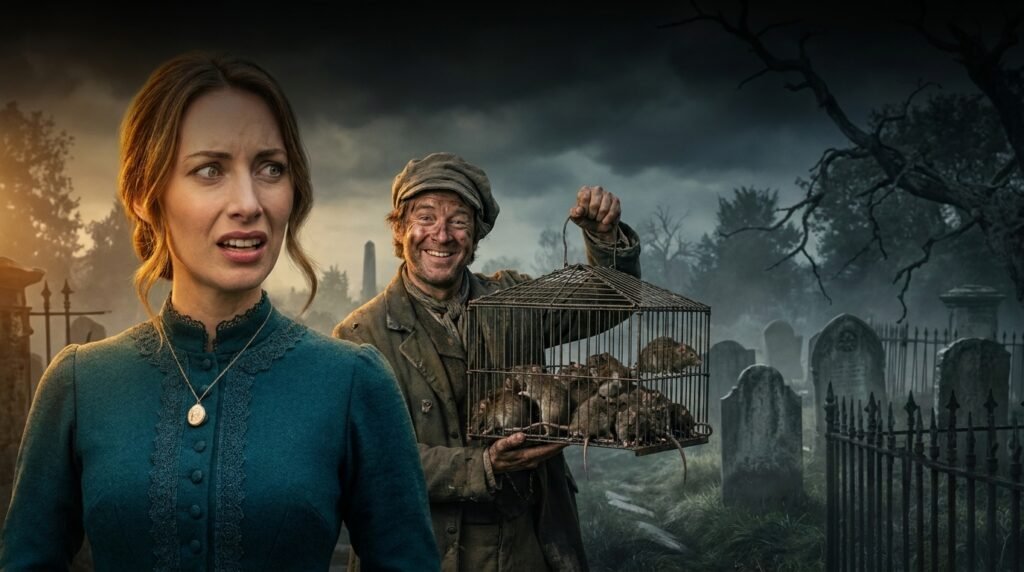
When we think about historical occupations, our minds often jump to blacksmiths, knights, farmers, or kings. However, surviving in the past often required people to take on far stranger, darker, and more stomach-churning roles. Long before modern office jobs, human ingenuity—and sheer desperation—gave birth to some of the most bizarre professions imaginable.
From wading into stagnant European ponds to use human flesh as live bait to eating bread off corpses to absorb spiritual guilt, history’s labor market was truly wild. In this deep dive, we travel across time to explore five of the strangest historical jobs ever created, how these trades operated, and why they eventually vanished from the modern world.
1. The Victorian Rat Catcher: Flamboyant Showmen with a Sly Secret
During the 19th century, rapid industrialization transformed cities like London into overcrowded, unsanitary hubs overflowing with waste. Naturally, millions of rats thrived in the sewers and streets, carrying deadly diseases like typhus and cholera. Enter the Victorian rat catcher.
Unlike modern exterminators who work quietly behind the scenes, Victorian rat catchers were flamboyant public figures. Dressed in elaborate, flashy clothing—often adorned with silver buckles, colorful sashes, and taxidermied rodents—they used ferrets, terriers, and their bare hands to capture pests. The most famous among them was Jack Black, who earned the official title of “Rat Catcher to Queen Victoria.” Black even bred unusual, colorful rats to sell as domesticated pets to aristocratic ladies.
However, the trade had a dark, mercenary side. To ensure continuous job security, many rat catchers secretly released pregnant rats back into neighborhood alleyways, guaranteeing that terrified residents would hire them again tomorrow!
2. The Welsh Sin Eater: Absorbing the Guilt of the Departed
In rural Wales, Scotland, and parts of England during the 17th, 18th, and 19th centuries, villagers held a deep fear of dying with unconfessed sins. To prevent the deceased from wandering as a restless spirit or suffering in the afterlife, families hired a “Sin Eater.”
The process was as eerie as it was solemn. A loaf of bread was placed upon the chest of the deceased, believed to absorb the dead person’s lifelong sins and moral transgressions. A bowl of ale or beer was handed over the corpse. The Sin Eater would consume the bread and drink the ale, officially taking the dead person’s sins upon his own soul in exchange for a few copper coins.
Because Sin Eaters were believed to accumulate the dark sins of dozens of dead souls, society treated them as spiritual pariahs. They were shunned, feared, and forced to live on the margins of villages, summoned only in darkness when a death occurred. Astonishingly, the last documented Sin Eater in Britain, Richard Munslow, passed away just over 100 years ago in 1906.
3. Body Snatchers & Resurrectionists: Grave Robbers of the Medical Age
During the 18th and 19th centuries, medical science was advancing rapidly in Britain and North America. Surgical schools required human cadavers for anatomical dissection to train future doctors. However, law strictly limited the legal supply of bodies to executed criminals, creating a massive shortage.
This black-market demand gave rise to “Resurrectionists,” commonly known as body snatchers. Operating under the cover of night, these teams quietly raided freshly dug graves, digging down to the head of the coffin, levering off the lid, and extracting the body before slipping away unnoticed. Medical schools paid handsomely for fresh specimens, making it a lucrative—though deeply illegal—trade.
The fear of body snatching was so intense that wealthy families installed heavy iron cages called “mortsafes” over graves or built watchtowers in churchyards, guarding the resting places of loved ones for weeks until decomposition rendered the body useless to grave robbers.
4. The Leech Collector: Human Bait in European Marshes
In 19th-century Europe, doctors believed in “humorism”—the medical theory that illnesses were caused by an imbalance in bodily fluids. The primary cure for almost every ailment, from headaches to pneumonia, was bloodletting. The preferred tool for bloodletting? Hirudo medicinalis, the medicinal leech.
Demand for leeches skyrocketed into the tens of millions annually, creating the job of the leech collector. Typically impoverished women or elderly laborers, leech collectors waded barefoot into muddy marshes and stagnant ponds across England, France, and Germany. They used their own bare legs as live bait, waiting for hungry leeches to attach to their skin before picking them off and storing them in wooden buckets.
This line of work took a heavy physical toll. Collectors frequently suffered from severe anemia, blood loss, and dangerous infections from open leg wounds. In fact, the medical craze was so immense that wild European leech populations nearly became extinct.
5. Professional Mourners: Paid Grief in the Ancient World
Across the ancient world—from Egypt, Rome, and Greece to ancient China and India—a quiet, modest funeral was seen as a sign of low social status. To demonstrate the prestige and importance of the deceased, wealthy families hired “moirologists” or professional mourners.
These paid performers—mostly women—were brought in to weep, wail, tear their clothes, and beat their breasts during funeral processions. The louder, more dramatic, and more chaotic the expression of grief, the greater the honor bestowed upon the departed soul in the afterlife.
In Ancient Rome, professional mourners were eventually banned from scratching their faces until they bled because the dramatic displays became too extreme! Remarkably, this ancient tradition survives today in select regions of East Asia, Africa, and parts of Europe, where families still hire skilled mourners to honor their loved ones.
Conclusion: Which Historical Job Would You Do?
From catching rats in Victorian alleys to consuming sins over dead bodies, history shows us that earning a living has always required adaptability, resilience, and sometimes a strong stomach. While these strange trades have vanished into history books, they served essential cultural, medical, and practical roles in their time.
Which of these bizarre historical jobs do you think you could have survived for a week? Let us know down in the comments below!
If you love uncovering the strange, forgotten, and dark corners of human history, don’t forget to watch the full video above on our official EVIE vs HISTORY YouTube channel. Subscribe and join us as we journey through every era and every hero!