Seven centuries ago, a great shadow swept across the world. The Black Death — the deadliest pandemic in human history — would go on to claim an estimated 200 million lives, touching nearly every land on earth. This is the story of how it began, how it spread, and how it changed our world forever.
Where the Black Death began
The plague did not begin in Europe. It slept for centuries in the wild steppes of Central Asia, carried by fleas living on small rodents. For generations it remained isolated — until the great trade roads opened. As merchants and caravans crossed the Silk Road, the plague found a path to travel, moving roughly two and a half miles every single day.
The siege of Kaffa
One of history’s most chilling moments came at the trading city of Kaffa on the Black Sea. As a Mongol army besieged the city, plague tore through their camp. In a gruesome act of early biological warfare, the attackers catapulted the infected dead over the city walls. Terrified merchants fled by ship — and carried the plague, hidden in the rats and fleas of their cargo holds, straight into the heart of the Mediterranean.
How the plague spread
By 1347 the plague ships reached Sicily, and the great dying began in Europe. It killed with terrifying speed: dark swellings, fever, and often death within days. Whole families could be lost in less than a week. With no understanding of germs or infection, terrified people believed it was the wrath of God.
The plague doctors
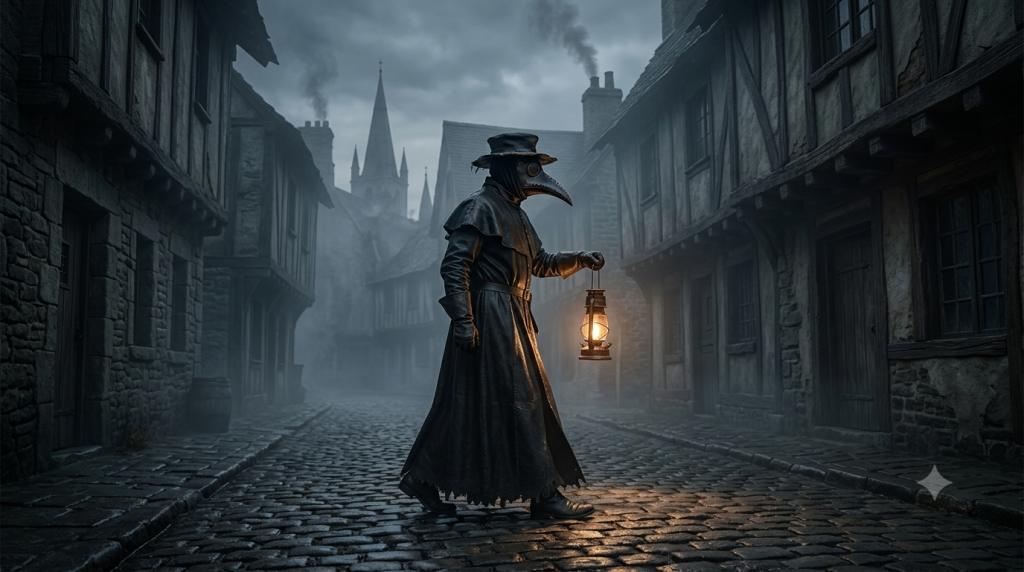
From this darkness came one of history’s most haunting figures — the plague doctor, in his long robe and beaked mask packed with sweet herbs to ward off what was believed to be poisoned air. These brave doctors risked their lives to help the dying, and many caught the plague themselves. Tragically, they were often blamed for spreading the very sickness they fought.
The birth of quarantine
Some cities fought back with an idea that genuinely worked. Venice held arriving ships at sea for forty days — and the word “quarantine” comes from the Italian quaranta giorni, meaning forty days. Places that isolated the sick saw far fewer deaths. It was humanity’s first great lesson in fighting a pandemic.
How the Black Death changed the world
By 1353, after six years of horror, the plague faded — but it left a world transformed. With so few workers left, ordinary people could demand fairer wages. The rigid feudal order began to crumble, a new middle class slowly rose, and people began to question the old certainties. Many historians believe the Black Death helped end serfdom and set Europe on the path to a new age.
From unimaginable tragedy, humanity endured and rose again. The Black Death remains a powerful reminder of how fragile — and how resilient — we truly are.
Watch the full immersive documentary on the Black Death on our YouTube channel, and explore more medieval history on the blog.