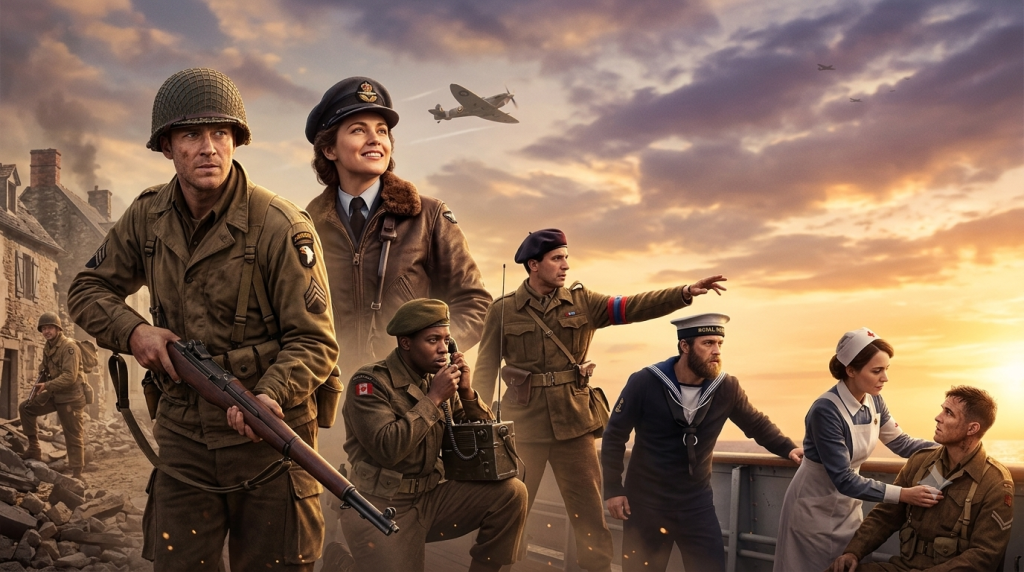
They were ordinary people. A yachtsman, a princess, a farmer, a sniper, a medic. None of them planned to be heroes — yet in the darkest hours of World War 2, they did the most extraordinary things imaginable. These are ten of the forgotten heroes who helped save the world.
A Titanic survivor sails to Dunkirk
In 1940, with 300,000 soldiers trapped on the beaches of Dunkirk, ordinary civilians sailed their little boats across the Channel to rescue them. Among them was Charles Lightoller — the most senior surviving officer of the Titanic — who, at 66, packed 127 soldiers onto a yacht built for 21 and sailed them home.
The man with the bagpipes
Jack Churchill went to war with a longbow, a sword, and bagpipes. He led a beach assault playing the pipes, scored the only confirmed longbow kill of the war, and when asked why he carried a sword, replied that any officer without one was “improperly dressed.”
The spy princess
Noor Inayat Khan, an Indian princess and children’s author, became the last Allied radio operator in occupied Paris. Betrayed and captured, she revealed nothing. Her final word was “Liberté” — freedom.
The man who volunteered for Auschwitz
Witold Pilecki did what no sane person would: he deliberately got himself sent to Auschwitz to report on it from the inside. He organised resistance, smuggled out the first reports of the atrocities, and escaped after nearly three years.
The heroes who would not give up
There was Lyudmila Pavlichenko, the Soviet sniper; Irena Sendler, who saved 2,500 children from the Warsaw Ghetto and hid their names in glass jars; Nancy Wake, the most decorated Allied servicewoman; Desmond Doss, the unarmed medic who lowered 75 wounded men down a cliff at Okinawa; Lachhiman Gurung, the one-handed Gurkha who held off an enemy attack alone; and Tommy Macpherson, the Scot who bluffed 23,000 Germans into surrender — armed with little more than a kilt and sheer confidence.
Why their stories matter
These ten came from different lands and walks of life, but they shared one thing: the courage to act. They did not save the world because they were special — they were special because they chose to act.
Today, fewer than 45,000 American WW2 veterans remain, and the British number is smaller still. This generation is leaving us, and when they go, their stories go too — unless we tell them.
If you know a veteran, call them. Visit them. Listen to them. And remember the names of those who became extraordinary when the world needed them most.
Watch the full tribute documentary, “The Generation That Saved The World,” on our YouTube channel.