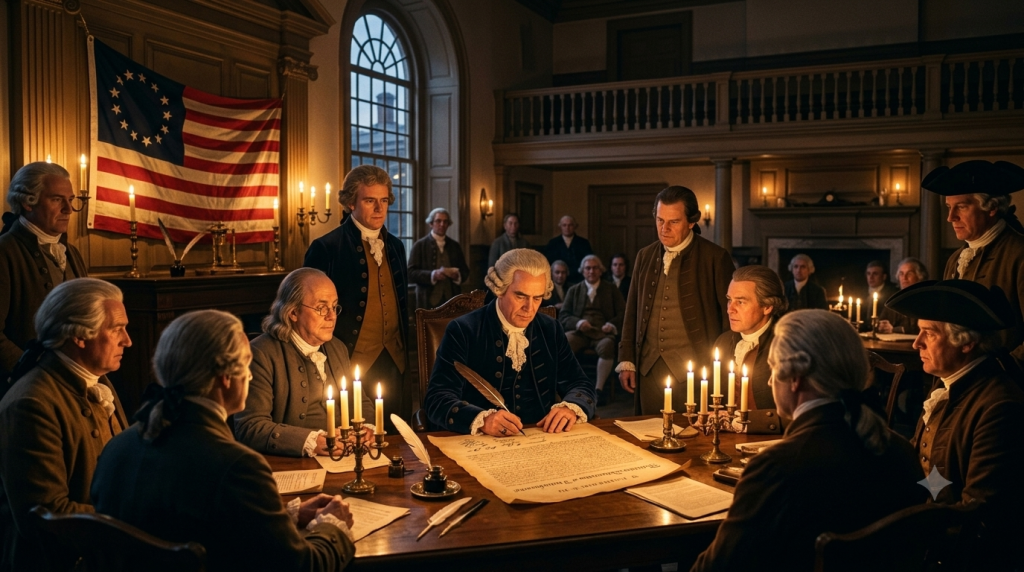
On 4 July 1776, thirteen colonies dared to defy the world’s greatest empire. The Declaration of Independence was more than a document — it was the birth of a nation, signed by men who knew it could cost them their lives.
No Taxation Without Representation
For years, Britain had taxed the American colonies without their consent. Anger boiled over — from the Boston Tea Party to the first shots at Lexington in 1775. War had begun, but the colonies had not yet declared themselves free.
The Continental Congress
In Philadelphia, the Continental Congress gathered to decide their fate. Many still hoped to reconcile with the king. But on 7 June 1776, Richard Henry Lee moved for independence: the colonies, he said, ought to be free and independent states. The room fell into fierce debate — for this was treason against the crown.
Jefferson’s Quill
Congress chose a Committee of Five to write the declaration, and the task fell to a quiet thirty-three-year-old: Thomas Jefferson. For seventeen days he searched for words worthy of a nation, and found them: We hold these truths to be self-evident, that all men are created equal.
The Vote
On 2 July 1776, Congress voted for independence — twelve colonies in favour. Two days later, on 4 July, they adopted the final wording of the Declaration. A new nation was born. John Adams believed the day would be celebrated forever.
The Signing
Contrary to legend, the famous signing did not all happen on 4 July. That day, only John Hancock signed, with his bold, unmistakable signature. Most of the 56 signers added their names on 2 August. By signing, each man risked death as a traitor — pledging their lives, their fortunes, and their sacred honour.
The Price of Freedom
The war raged for seven more years. George Washington led a ragged army against the world’s greatest power, enduring bitter winters and crushing defeats. France joined the fight, and in 1781 the British surrendered at Yorktown. In 1783, Britain finally recognised the United States.
Legacy
The Declaration became a beacon of freedom for the whole world, inspiring revolutions across the earth. In a remarkable twist of history, both Thomas Jefferson and John Adams died on the same day — 4 July 1826 — exactly fifty years after the nation they built was born.
Watch the full immersive story on our YouTube channel, and follow for more history every week.