Stepping through the towering heavy timber gates of a Norman stone castle around the year 1150 is like entering a completely self-contained world. Movie depictions often portray castles as cold, silent, and empty stone monuments, but the historical reality was vastly different. A medieval fortress was a teeming, noisy, and bustling hive of activity—essentially a small, fortified town wrapped inside thick defensive masonry.
From the smoke of the kitchens to the heights of the windy battlements, every square foot of a 12th-century castle served a distinct, survival-oriented purpose. But if you were suddenly transported back to the High Middle Ages, would you actually have what it takes to survive a single day?
The Gateway into the Citadel: Murder Holes and Courtyard Chaos
Before you could even set foot inside the main grounds, you had to pass through the outer defenses. Castles were built primarily as military engines, and every entry point was designed to be a death trap for unwanted visitors.
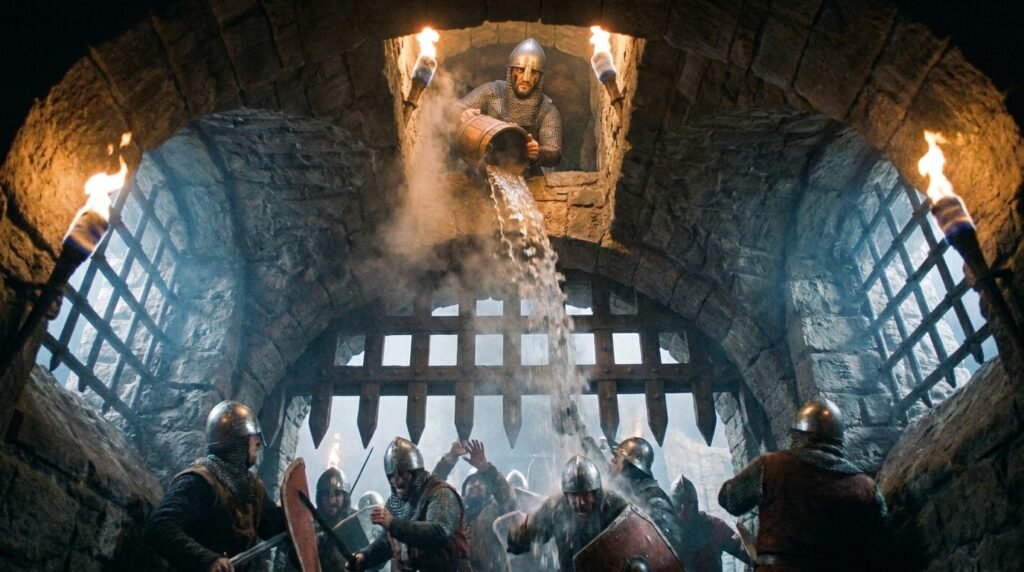
Looking up at the vaulted ceiling of the gatehouse, you would spot several vertical openings known as murder holes. If an attacking force managed to breach the heavy wooden portcullis, guards stationed on the floor above could rain down heavy stones, hot water, or projectiles onto the intruders trapped in the narrow passageway below.
Once past the entry gate, you emerged into the courtyard (or bailey)—the beating heart of the fortress. Hundreds of people lived and worked within these walls. Blacksmiths hammered out iron horseshoes and repaired armor, cooks tended to fires, servants rushed with supplies, and soldiers marched between watch posts. The air was thick with the scent of woodsmoke, livestock, and baking bread, filled with the constant chatter of a self-sustaining community.
Life inside the Great Hall: Hierarchy, Salt, and Rushes
The absolute center of social life inside the castle was the Great Hall. This grand chamber was where the entire castle household gathered to eat, celebrate, and conduct daily business.
However, equality did not exist within these walls. Feudal rank governed every aspect of seating and dining:
- The High Table: The lord and his immediate family sat elevated on a raised platform (the dais) at one end of the hall, looking down upon everyone else. They were served the finest cuts of meat and spices.
- The Lower Tables: Retainers, soldiers, and common workers sat below on long trestle benches arranged according to their social standing.
- The Flooring: The stone floor of the Great Hall was strewn with fresh rushes and sweet-smelling herbs to mask odors. Over time, however, food scraps, spilled ale, and dirt settled beneath the reeds, making it best not to inspect the floor too closely!
Endless Work in the Kitchens: The Heat of Medieval Culinary Duty
Feeding hundreds of residents, soldiers, and visiting nobles required constant culinary labor. The castle kitchen was a hot, sweat-inducing, and chaotic workspace that never truly rested. Giant cauldrons of pottage—a thick grain and vegetable stew—simmered over roaring open hearths alongside large roasts prepared for the lord’s table.
+-----------------------------------------------------------------------+
|                       THE CASTLE KITCHEN ROSTER                       |
+-----------------------------------------------------------------------+
|  Primary Staple: Pottage (thick stew of grains, beans, and vegetables)|
|  Lord's Menu:    Spiced roasted meats, fresh bread, and fine wines    |
|  Crucial Role:   The Spit Boy (turning meat over open flames all day) |
+-----------------------------------------------------------------------+
One of the most physically punishing roles in the kitchen belonged to the spit boy. Tasked with turning heavy iron spits loaded with meat over roaring open flames for hours on end, these young workers endured blistering heat and grueling shift work just to ensure the noble feast cooked evenly.
Defensive Genius: Clockwise Spiral Stairs and the Guardrobe
Moving deeper into the central keep reveals brilliant defensive architecture hidden in everyday structures.
The Lethal Spiral Staircase
If you climb the narrow stone staircases leading to the upper towers, you will notice that almost all of them spiral clockwise as they ascend. This was a deliberate architectural defense mechanism:
- The Attackers: A right-handed swordsman fighting their way up the stairs had their sword arm blocked by the central stone column, leaving virtually no room to swing a weapon.
- The Defenders: A defender fighting downward had maximum clearance along the outer wall to swing their sword freely.
Sanitation at the Top: The Guardrobe
Near the private chambers lay the guardrobe—the medieval castle toilet. Constructed as a small stone room with an opening that dropped waste directly down into the moat or outer pit below, it was rudimentary yet functional. Historically, clothing was often hung inside these small rooms because the ammonia fumes from the waste pit helped kill off clothes lice and parasites—giving rise to our modern word wardrobe.
Privacy, Faith, and the High Battlements
At the highest levels of the keep sat the solar, the lord’s private family room. In a castle where dozens of servants and soldiers slept side-by-side on the floor of the Great Hall, true privacy was an extraordinary luxury reserved only for nobility.
Above the solar stood the imposing battlements. Protected by stone teeth (crenels and merlons), guards kept constant watch over the surrounding countryside. From this vantage point, sentries could spot approaching threats long before an enemy reached the tree line. In times of siege, these walls allowed defenders to withstand assaults for months on end.
Finally, no medieval stronghold was complete without its chapel. In a dangerous and uncertain world, faith offered daily solace, grounding the lives of every resident from the lowliest servant to the high lord himself.
Could You Have Survived?
Life inside an 1150s castle was a delicate balance of military precision, hard physical labor, strict social hierarchy, and constant vigilance. While it offered protection behind heavy stone walls, it demanded relentless work from everyone inside.
Want to travel further back in time and uncover the real truth behind history’s greatest eras? Subscribe to the EVIE vs HISTORY YouTube Channel for weekly myth-busting breakdowns, historical deep dives, and immersive look-backs at the past!